Built in the work
Hands-on production shaped a practical understanding of how creative work really moves, where it slows down, and what quality requires.
For more than a decade, Sherlock has helped creative teams turn complex ideas into work that moves across formats, markets, platforms, and audiences. As the work became more connected, so did we.
See how Sherlock evolved ↗Sherlock grew from direct experience inside creative production: the briefs that change, the details that multiply, the approvals that cross teams, and the final assets that still need to arrive correctly and on time.
That proximity to the work shaped the company. Instead of separating creative execution, localization, workflow, technology, and delivery, we learned to see them as parts of one connected operation.
Better creative operations are not built from theory. They are built by understanding the work from the inside.
Hands-on production shaped a practical understanding of how creative work really moves, where it slows down, and what quality requires.
More formats, markets, languages, platforms, and stakeholders made connected operations increasingly essential.
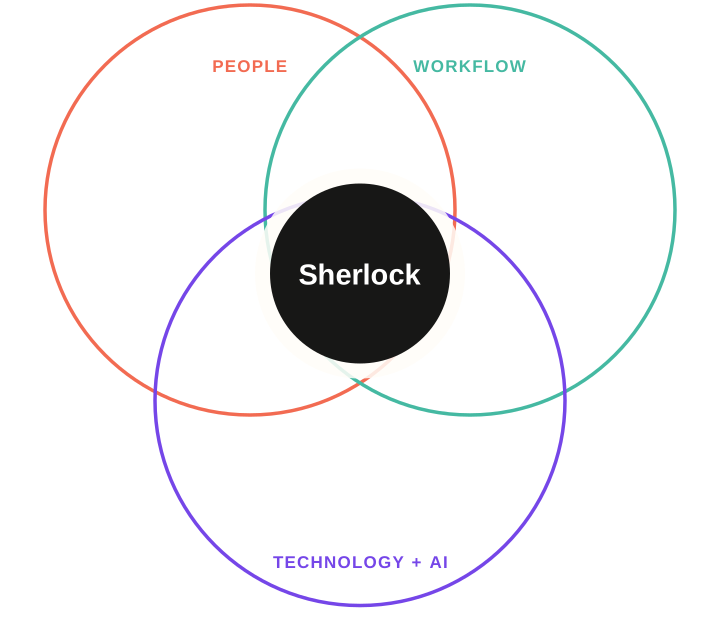
Sherlock connected services, workflow design, production intelligence, and technology around one shared view of the work.
Experienced people and adaptable technology now work together to make complex creative operations clearer, faster, and more manageable.
Sherlock continues to evolve, but the standards guiding that evolution have been remarkably consistent.
Scale should never come at the expense of intent, craft, accuracy, or brand integrity.
The smallest specifications, decisions, and handoffs often determine whether the whole operation succeeds.
We keep looking for practical ways to make the work easier, the workflow smarter, and the outcome stronger.
Today, Sherlock brings global teams, deep production experience, adaptable workflows, and purpose-built technology together around the way each client actually works.
Sherlock will continue exploring automation, AI, and connected data where they can remove friction, improve visibility, and create practical value. The tools will keep changing. Human judgment, accountability, and creative intent will remain central.
Tell us what your team is working through, and we’ll help identify a practical way forward.


